
- Hospital Furniture
- Neonatal Care Product
- Operating Surgical Tables
- Orthopedic Implants
- Surgical Operating Led Lights
- Orthopedic External Fixators
- Laryngoscopes
- Orthopaedic Power Tools
- Medical Disposables
- Hospital Clothing
- Anaesthesia Products
- Autoclaves & Sterilizers
- Hospital Holloware
- Suction Units
- Rehabilitation Aids
- Stethoscopes
- Anesthesia Machine & Ventilators
- Cold Chain Equipment
- Electro Medical Equipments
- Orthopedic Instruments
- Surgical Operating Led Lights
- Physiotherapy products
10 Tips for Sourcing U100 Dried Mango in Bulk
Sourcing u100 dried mango in bulk requires more than comparing prices on a supplier spreadsheet. The product label may look precise, yet “U100” is not a universally harmonized international grade. Some suppliers use it to describe fewer than 100 pieces per kilogram, while others apply different counting bases. Confirm the unit, slice weight, moisture range, and allowable defects before requesting quotations. Small wording differences can change the shipment.
Market context also matters. FAOSTAT reports that global production of mangoes, mangosteens, and guavas exceeded 60 million tonnes in recent years, showing the depth of the raw-material base. However, fresh mango production does not equal dried-mango availability. Processing losses, seasonal harvests, variety selection, and local drying capacity affect supply. The International Trade Centre’s Trade Map data can help compare dried-fruit export patterns, but its classifications may combine several fruit products. It should guide research, not replace supplier verification.
A reliable sourcing process examines origin, harvest timing, drying method, sulfur or additive declarations, microbiological controls, and packaging performance. Ask for recent certificates of analysis, not only attractive product photographs. Inspect a sample for chewy texture, darkened edges, uneven slices, and sticky clusters. Food safety systems such as HACCP and recognized GFSI certification can strengthen supplier evaluation, although certificates still require checking.
The practical details matter. A 10-kilogram carton may look efficient until damaged inner bags create moisture problems. Pricing alone misleads. This guide presents ten practical tips for buying u100 dried mango in bulk, while acknowledging one uncomfortable point: supplier claims are not evidence until documents, samples, and batch results agree.
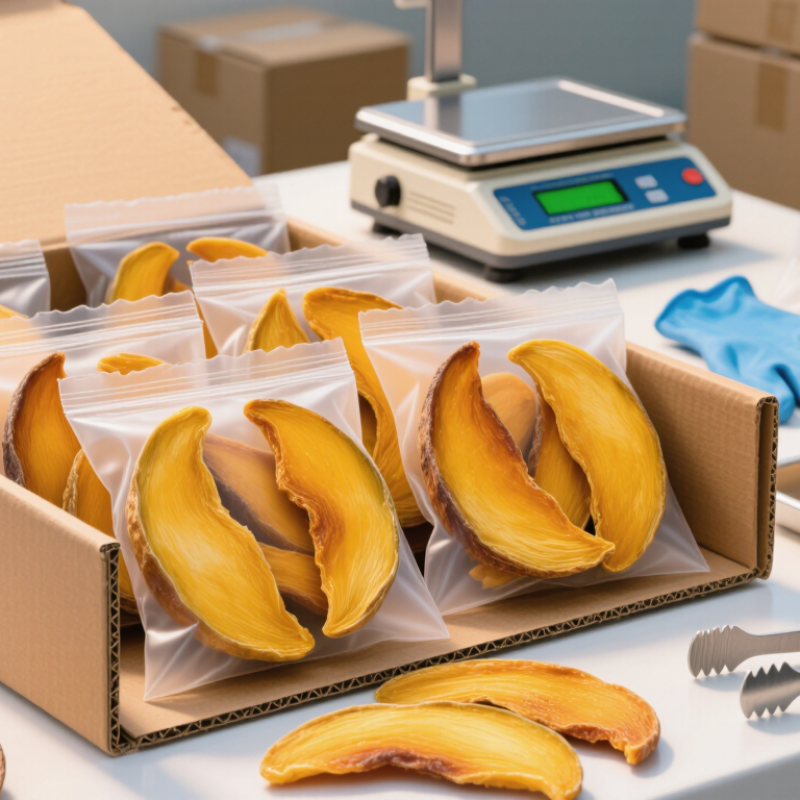
Table of Contents [Hide]
Define U100 Dried Mango Specifications and Quality Requirements
U100 dried mango must be defined before price discussions begin. In most bulk trade, U100 means fewer than 100 pieces per pound, indicating larger cuts. Confirm whether the supplier measures whole slices, strips, or broken pieces. A practical specification should state moisture, slice thickness, color, flavor, and permitted defects. For example, require 12–18% moisture, a chewy texture, and no fermented odor. These limits should match your product use.
Tip: Request a signed specification sheet and a 500-gram production sample. Check ten random pieces. Record their weight, thickness, and surface condition. This simple test often exposes inconsistent sizing. The U.S. Food and Drug Administration emphasizes preventive controls and documented hazard analysis for processed foods. Therefore, ask for recent microbiological results, pesticide-residue testing, and allergen-control records. The documents matter.
FAOSTAT’s 2023 data place global mango, mangosteen, and guava production above 60 million metric tons. Large supply does not guarantee uniform dried fruit. Drying temperature, ripeness, and storage humidity can change texture quickly. The Codex General Standard for Contaminants and Toxins in Food and Feed provides useful reference points for contaminant control. Still, buyer specifications must be stricter when required by the destination market. I would also define sulfur dioxide status, even for unsulfured products, because cross-contact can occur. That detail is easy to miss. A calibrated moisture meter, retained samples, and lot-level traceability create stronger evidence than attractive photographs. Be cautious with vague terms like “premium” or “natural.” They sound useful, but they are not measurable.


