
- Hospital Furniture
- Neonatal Care Product
- Operating Surgical Tables
- Orthopedic Implants
- Surgical Operating Led Lights
- Orthopedic External Fixators
- Laryngoscopes
- Orthopaedic Power Tools
- Medical Disposables
- Hospital Clothing
- Anaesthesia Products
- Autoclaves & Sterilizers
- Hospital Holloware
- Suction Units
- Rehabilitation Aids
- Stethoscopes
- Anesthesia Machine & Ventilators
- Cold Chain Equipment
- Electro Medical Equipments
- Orthopedic Instruments
- Surgical Operating Led Lights
- Physiotherapy products
What Is a Red Light Therapy Pod and How Does It Work?
A Red Light Therapy Pod is a full-body device that uses low-intensity red and near-infrared light. Its LED panels surround the user inside a spacious chamber. Unlike a tanning bed, it does not rely on ultraviolet radiation to darken the skin.
The proposed process is called photobiomodulation. Specific wavelengths may reach the skin and influence cellular activity, including energy production in mitochondria. This may support normal skin repair, circulation, and temporary muscle recovery. The experience is usually quiet and warm, with no intense heat or burning sensation. Still, comfort does not prove effectiveness.
Evidence is growing.
Research findings vary by device, wavelength, treatment time, and individual health. Some studies report improvements in skin texture or exercise recovery, while others show modest or uncertain results. Therefore, a Red Light Therapy Pod should not be presented as a cure or a replacement for medical treatment. Device quality also matters. Poorly measured output can make treatment inconsistent.
A responsible guide should explain how the technology works, what users may realistically notice, and where evidence remains limited. Eye protection may be appropriate, depending on the design and instructions. People with light-sensitive conditions or certain medications should consult a qualified healthcare professional before use. Personal experience can be useful, but it is not the same as clinical proof. That distinction deserves attention.
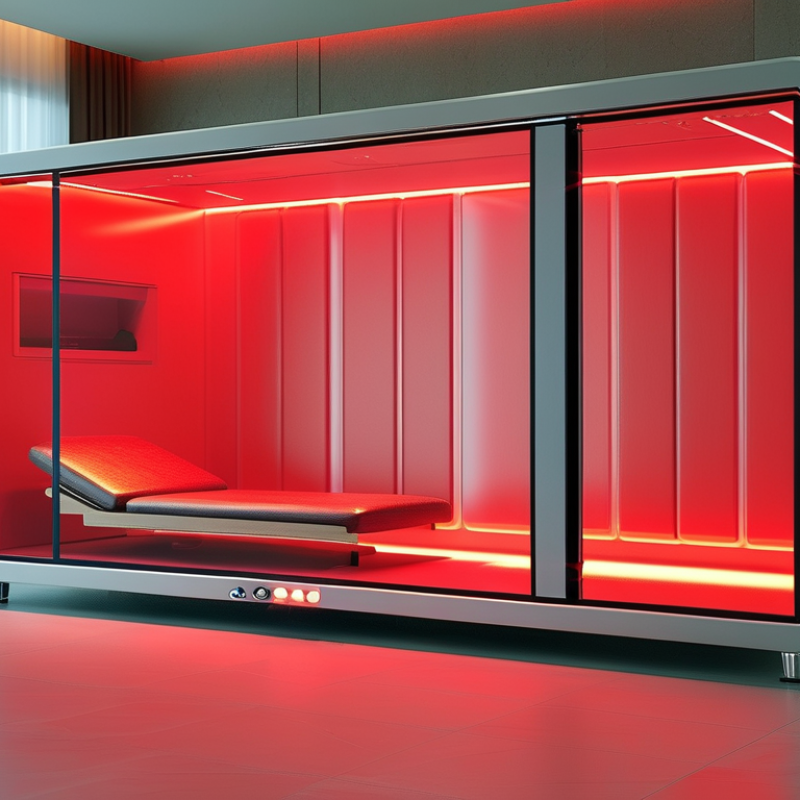
Table of Contents [Hide]
Definition and Core Components of a Red Light Therapy Pod
A red light therapy pod is an enclosed photobiomodulation system designed to expose the body to controlled, non-ionizing light. Its core components include LED panels, a reflective interior, a timer, cooling fans, and a control interface. Many systems use red wavelengths near 630–660 nanometers and near-infrared wavelengths around 810–850 nanometers. These ranges are common, not universal.
The engineering is not simple. LED arrays must deliver measured irradiance, usually expressed in milliwatts per square centimeter, across the treatment area. Dose depends on both irradiance and exposure time. A five-minute session at one output is not equivalent to a five-minute session at another. Quality systems should disclose wavelength, irradiance, distance, session duration, and electrical safety information. IEC 62471 evaluates photobiological safety for lamps and lamp systems, offering a useful reference for risk assessment. Eye protection may still matter, especially with bright, close-range LEDs.
A pod is not automatically better than a panel. The Global Wellness Institute’s 2024 Global Wellness Economy Monitor valued the wellness economy at 6.3 trillion dollars in 2023, showing strong consumer interest, but market growth does not prove clinical effectiveness. I would examine testing records rather than glowing promises. Some devices also report peak wavelength without showing output consistency across the enclosure. That gap deserves attention. Reliable evaluation should consider comfort, heat, ventilation, maintenance, and whether published settings match real use. Photobiomodulation research remains promising, yet results vary with dose, tissue depth, and individual conditions.


