
- Hospital Furniture
- Neonatal Care Product
- Operating Surgical Tables
- Orthopedic Implants
- Surgical Operating Led Lights
- Orthopedic External Fixators
- Laryngoscopes
- Orthopaedic Power Tools
- Medical Disposables
- Hospital Clothing
- Anaesthesia Products
- Autoclaves & Sterilizers
- Hospital Holloware
- Suction Units
- Rehabilitation Aids
- Stethoscopes
- Anesthesia Machine & Ventilators
- Cold Chain Equipment
- Electro Medical Equipments
- Orthopedic Instruments
- Surgical Operating Led Lights
- Physiotherapy products
How to Choose the Right Implant Wrench in 2026?
Choosing the right Implant Wrench in 2026 is not a brand-only decision. It is a fit, torque, and workflow decision. A wrench that looks suitable may still mismatch the implant system or driver interface. Check the manufacturer’s instructions, connection type, torque range, calibration status, and cleaning requirements before use. The markings should be easy to read under operatory lighting, and the handle should feel controlled—not slippery—in a gloved hand.
Dr. Carl E. Misch, a widely recognized implant dentistry educator, emphasized prosthetically driven planning in his clinical teaching. A practical takeaway for wrench selection is: “Choose the tool that delivers the specified torque for the system in use.” This wording is a summary, not a verbatim quotation. That distinction matters. Exact recommendations vary by implant system, and a wrench should never replace the manufacturer’s protocol.
This guide compares manual, ratcheting, and torque-indicating options, with attention to compatibility, ergonomics, maintenance, and traceable calibration. Picture a compact cassette, legible scale, and secure connection at the chairside. Small details can prevent delays. They do not guarantee outcomes. One point deserves a second look: clinicians sometimes favor familiar tools even when protocols change. In 2026, verify the current instructions before choosing—or reusing—an Implant Wrench.
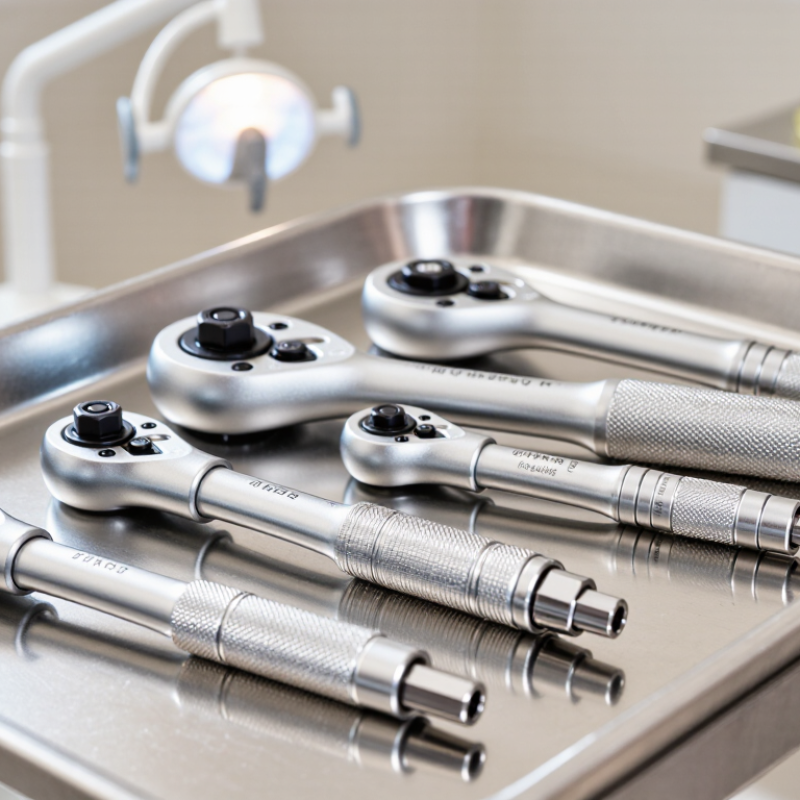
Table of Contents [Hide]
What an Implant Wrench Is and How It Functions
An implant wrench is a hand instrument used to turn compatible implant components, such as a prosthetic screw or abutment. Its working end fits the component’s driver slot or shape. The handle gives the user control; a torque wrench may also indicate or limit applied force. Small details matter. A worn or mismatched tip can slip, damage the connection, or make the reading unreliable.
During use, the tip is seated fully before the handle is turned. With a calibrated torque wrench, force is applied according to the component’s instructions, rather than guessed by feel. Clicks or other signals can indicate that a preset torque has been reached, depending on the instrument design. Not every wrench measures torque. Some are intended only for controlled manual turning. That distinction is easy to overlook.
A clean, intact instrument helps support consistent handling. Check that the driver engages securely and that the wrench moves smoothly; resistance or looseness deserves attention. Calibration and cleaning requirements vary, so follow the instrument and implant-system instructions. In practice, a tool can feel familiar yet still be unsuitable for a different connection. That is worth questioning. The right wrench is not simply the one that fits loosely over the part; it must engage correctly and be used within its intended range.


